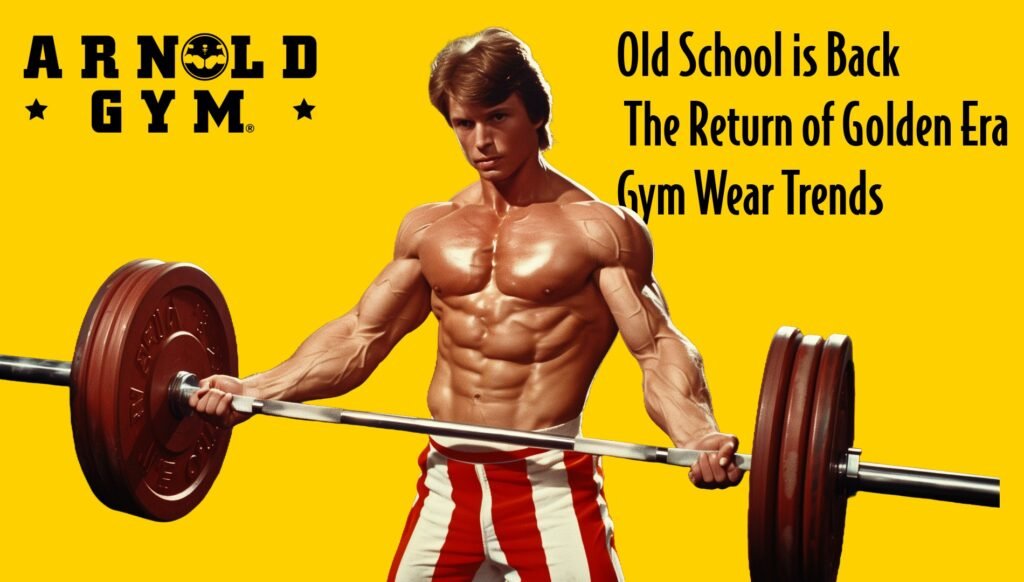
The era of neon spandex and high-tech, slippery polymers is fading. In the most serious iron dens across the UK, a raw, authentic aesthetic is reclaiming its territory. Golden Era Gym Wear is not merely a nostalgic fashion statement; it is a deliberate return to the mindset of the legends. From raw cotton fabrics to deep-cut silhouettes, Old School gym wear is dominating once again. Here is why the classic look builds better athletes and why the “Venice Beach” aesthetic is timeless.
The Psychology of the Lift: Why Style Matters
For years, the fitness industry tried to convince us that we needed moisture-wicking, compression-fit technology to perform at our best. While these fabrics have their place on the running track or the cycling velodrome, the requirements of the weight room are fundamentally different. The legends of the 1970s—Arnold, Franco, Zane—didn’t train in polyester. They trained in heavy cotton, rugged cuts, and gear that could take a beating. And science suggests they were on to something profound.
This phenomenon is known in academic circles as Enclothed Cognition. This term, coined by researchers Hajo Adam and Adam D. Galinsky, describes the systematic influence that clothes have on the wearer’s psychological processes. Put simply, when you dress the part, you become the part. Wearing gear associated with power, history, and stoic dedication subconsciously primes your brain for focus and effort. It shifts your mentality from “exercising” to “training.” When you put on a heavy cotton hoodie, you aren’t just covering your torso; you are putting on armor for battle.
The Art of Visual Feedback: The Stringer Vest
In the Golden Era, the mirror wasn’t for vanity; it was a tool for technical correction. To build a balanced, symmetrical physique, a lifter needs to see the muscle working in real-time. This is where the modern t-shirt fails and the classic cut excels. You cannot sculpt what you cannot see.
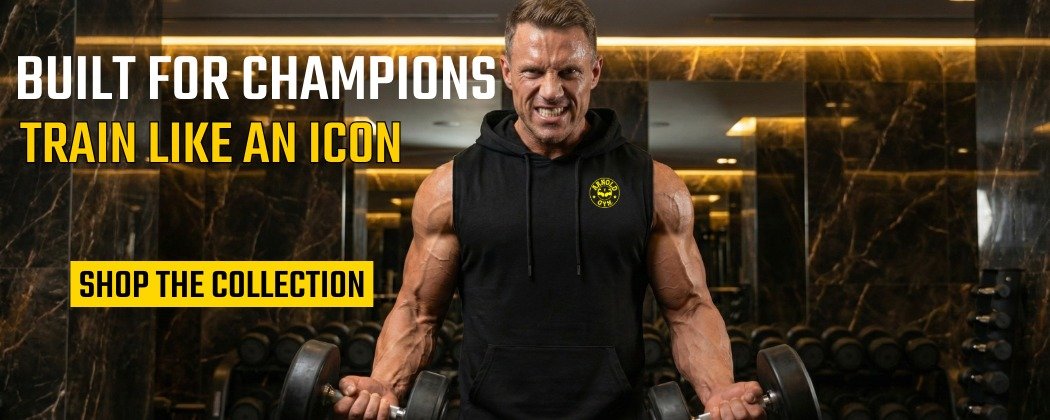
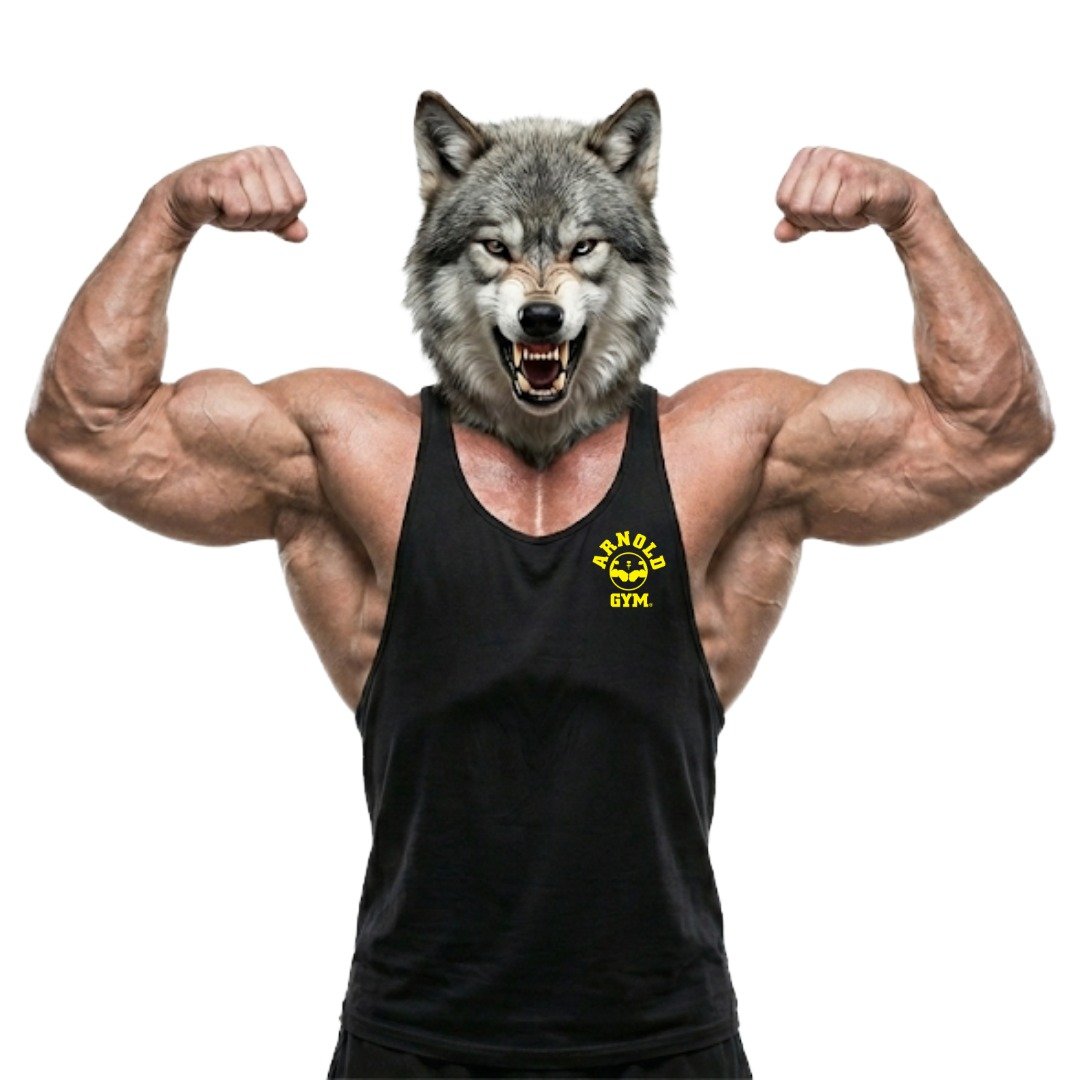
This is the philosophy behind our beast stringer gym vest. Unlike restrictive modern cuts, the stringer is designed to expose the deltoids, the trapezius, and the upper chest fibers. When you are performing a lateral raise, a heavy row, or a preacher curl, the stringer allows for immediate visual feedback. You can verify that the target muscle is contracting fully, strengthening the crucial mind-muscle connection.
Beyond the biomechanics, there is an undeniable motivational factor. Seeing the pump in real-time, framed by a classic Y-back cut, pushes you to squeeze out that extra rep that creates new growth. It connects you to the lineage of Gold’s Gym in 1975.
The “Pump Cover” Protocol
However, you don’t walk into the gym ready to reveal everything immediately. There is a ritual to the Golden Era workout. It begins with warmth, volume, and focus. The legends understood that joints need to be lubricated and muscles kept hot to prevent injury during those heavy compound movements.
Enter the oversized tee, affectionately known today as the “pump cover.” An old school bodybuilding oversized t-shirt serves a dual purpose. Physiologically, the heavy cotton traps body heat, accelerating your warm-up and keeping the blood flowing to the working tissues. Psychologically, it creates a barrier between you and the distractions of the gym environment. It puts you in “monk mode.”
There is a specific satisfaction in the transition—starting the session in an oversized tee, moving heavy weight, and then, once the muscle is engorged with blood, peeling off the layer to reveal the work underneath. It is a progression that mirrors the intensity of the workout itself.
The Rag Top: A Lost Icon Returns
Between the stringer and the hoodie lies the unsung hero of 80s bodybuilding: The Rag Top. Originally created by lifters cutting the sleeves and collars off their sweatshirts, this item became a staple for a reason. It offers the warmth of a sweatshirt for your core while leaving your arms free to move and expand.
The rag top is the ultimate “utility” garment. It sits loosely on the frame, making the upper body look wider, while the raw edges prevent any constriction around the neck or biceps. It is the perfect middle ground for those days when a stringer feels too exposed, but a full hoodie feels too hot. It screams “hardcore training” without saying a word.
Built for the Iron: The Durability of Cotton
One major reason for the resurgence of Golden Era Gym Wear is the rejection of “fast fashion” fragility. Modern synthetic gym clothes often feel slippery, thin, and plastic-like. They lack the friction required for heavy lifting. Have you ever tried to bench press on a vinyl bench while wearing a slick polyester shirt? You slide around, losing the tightness and stability in your upper back (scapular retraction).
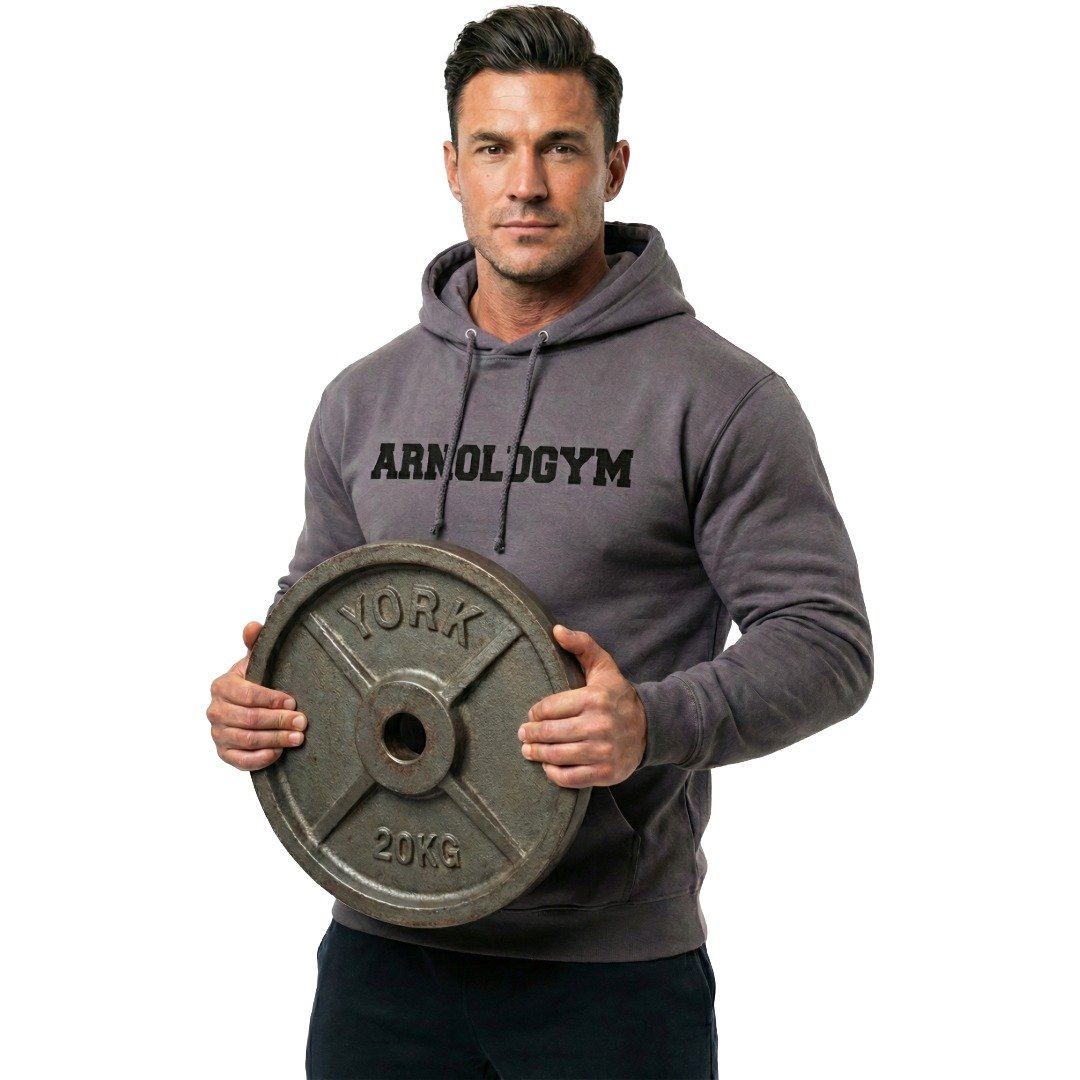
Cotton grips. It bites into the bench, providing a stable platform for you to press from. It withstands the aggressive knurling of a deadlift bar resting against your shins or quads. This durability is why we invest heavily in our bodybuilding hoodies. These aren’t just for the commute; they are tools. They are rugged enough to withstand the friction of a squat bar across your traps while remaining soft against the skin.
For those who want to channel the specific aesthetic of Venice Beach in its prime, the old school gym hoodie offers that distinctive vintage look. The gold colourway isn’t just a design choice; it is a nod to the trophies and the sunshine of the era where it all began.

Leg Day: The Return of the Quad Sweep
While the upper body often gets the glory in bodybuilding, the Golden Era was built on the squat rack. You cannot build a sweep to the quadriceps if your gear is fighting against you. The trend of long, baggy basketball shorts in the 90s and 2000s did a huge disservice to leg training. Fabric getting caught on the knees disrupts the kinetic chain, and hidden legs are often ignored legs.
This is why shorter, more fitted shorts are making a massive comeback. You need absolute freedom of movement in the “hole” of a deep squat. Our men’s gym shorts bundle is curated to provide exactly that. They sit correctly on the mid-thigh, staying out of the way during deadlifts and lunges, ensuring that your focus remains entirely on the weight, not on adjusting your waistband. Plus, seeing the muscle contract provides that necessary visual biofeedback.
Honouring the Heritage
Choosing to wear Old School gym wear is a commitment to a specific set of values. It says that you value history, hard work, and stoicism over fleeting trends and fancy gadgets. It connects you to a lineage of men and women who viewed bodybuilding not as a hobby, but as an art form.
To truly understand the depth of this culture, one must look at the titans who built it. We explore the career of one such modern legend who carried the torch of hard work in our feature: The Golden Era of Bodybuilding: Ronnie Coleman.
Furthermore, if you are looking to educate yourself on the training principles that accompanied this clothing style, we have curated a list of essential reading. Check out our guide to the Top 5 Must-Read Golden Era Bodybuilding Books for Lifters.
Trends come and go. The spandex will fade, the neon will dim. But iron, sweat, and the classic silhouette are timeless. Dress with purpose. Train with intention.
Frequently Asked Questions (FAQs)
Q: What exactly defines Golden Era gym wear?
A: Golden Era Gym Wear refers to the training apparel style popularised in the 1970s and 80s. It is characterised by natural fabrics (predominantly cotton), deep-cut stringer vests to show off the physique, rag tops, and shorter shorts. It prioritizes durability and range of motion over modern compression technology.
Q: Why do bodybuilders wear oversized t-shirts?
A: Often referred to as a “pump cover,” an old school bodybuilding oversized t-shirt is essential for the start of a workout. It keeps the upper body warm, lubricating the joints for heavy lifting, and helps the lifter maintain mental focus by blocking out visual distractions until the muscles are pumped and ready to be revealed.
Q: Are cotton hoodies actually good for training?
A: Absolutely. High-quality bodybuilding hoodies provide better grip on bench presses and squat bars compared to slippery synthetic fabrics. They are also superior for retaining body heat during rest periods, which is crucial for preventing injury during strength training.
Q: What is the benefit of a stringer vest?
A: A beast stringer gym vest offers unrestricted movement for the shoulders and lats. More importantly, it provides visual feedback, allowing the lifter to see muscle fibers contracting. This improves the mind-muscle connection—a key component of hypertrophy training—allowing for a deeper and more effective workout.